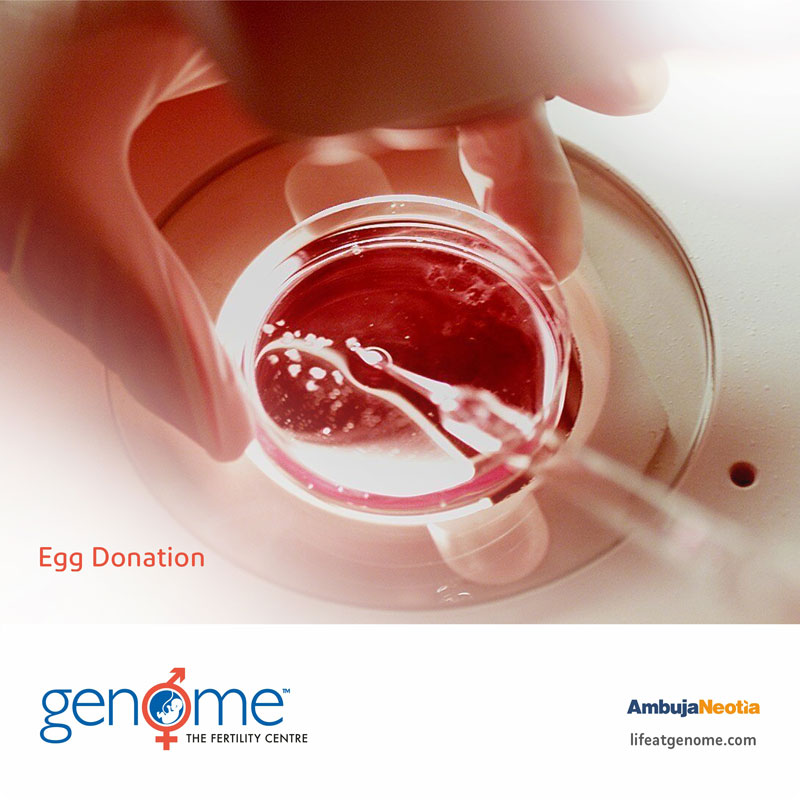
Donor Egg
Donor egg is a reproductive technology used in cases where a woman's own eggs are not viable or of poor quality, or if there is a risk of passing on a genetic disorder to the offspring. In donor egg treatment, eggs from a donor are used instead of the woman's own eggs for fertilization with sperm, typically via in vitro fertilization (IVF).
The process of donor egg treatment typically involves selecting a donor who is typically younger, healthy and has undergone screening tests for infectious diseases and genetic disorders. The donor's eggs are then retrieved from her ovaries using a minimally invasive procedure, and fertilized with the sperm of the intended father or a donor sperm. The resulting embryos are then cultured in a laboratory for several days, after which one or more embryos may be transferred to the uterus of the intended mother or a surrogate.
Donor egg treatment can be an effective option for women who are unable to conceive with their own eggs due to various reasons including advanced maternal age, premature ovarian failure, or genetic disorders. It can also be used in cases where previous attempts at IVF with the woman's own eggs have been unsuccessful. Donor egg treatment typically has higher success rates compared to IVF with the woman's own eggs, especially in women over the age of 40.
It is important to discuss the benefits and limitations of donor egg treatment with Genome consultant to determine if it is the most appropriate treatment option for each individual or couple.