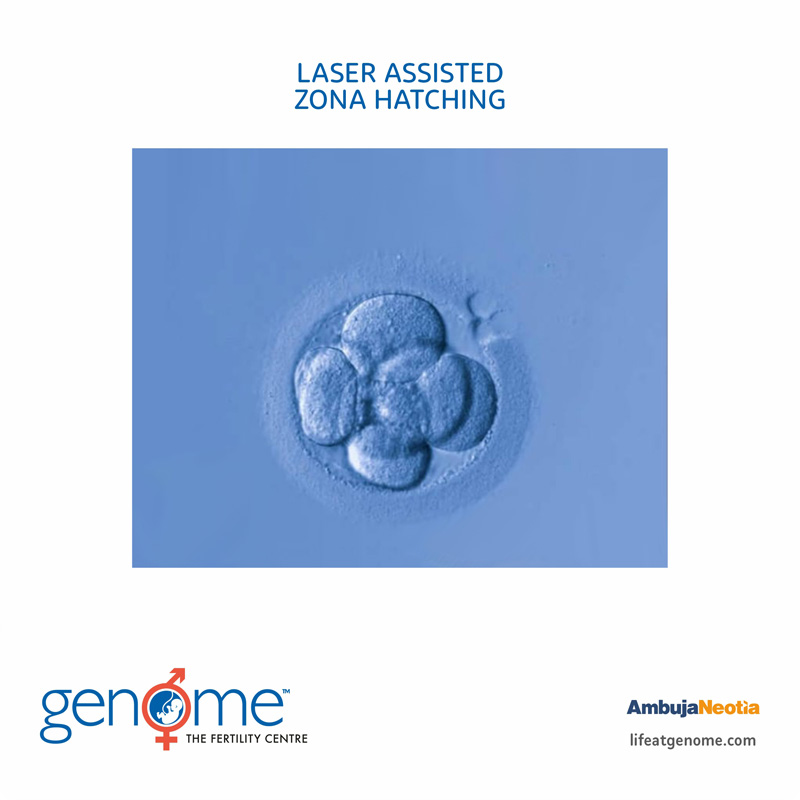
Assisted Hatching
Assisted hatching is a technique used during in vitro fertilization (IVF) to help embryos hatch out of their protective outer layer (zona pellucida) and implant into the lining of the uterus. The technique involves making a small hole or thinning a section of the zona pellucida using a laser or chemical treatment.
Assisted hatching is typically used in cases where the zona pellucida of the embryo is abnormally thick or hard, which can make it more difficult for the embryo to hatch and implant. It may also be used in cases where the woman is older or has had previous unsuccessful IVF cycles.
The procedure of assisted hatching is performed shortly before the embryo transfer, after the embryos have been cultured in the laboratory for several days. The procedure is typically performed on only a select number of embryos, as not all embryos are suitable for assisted hatching.
It is important to discuss the benefits and risks of assisted hatching with genome consultant and embryologists to determine if it is the most appropriate treatment option for each individual or couple.